


The Ultimate Buyer's Guide to Instant Noodles Production Line: Technology, Efficiency, and Market Outlook (2026)
Introduction
The global instant noodle industry continues its remarkable trajectory, with annual demand surpassing 120 billion servings and counting. What began as a post-war convenience food has evolved into a dietary staple across cultures, from the bustling cities of East Asia to the emerging markets of Africa and Latin America. Behind every packet of noodles that reaches consumers in under four minutes lies a marvel of modern food engineering—the instant noodles production line.
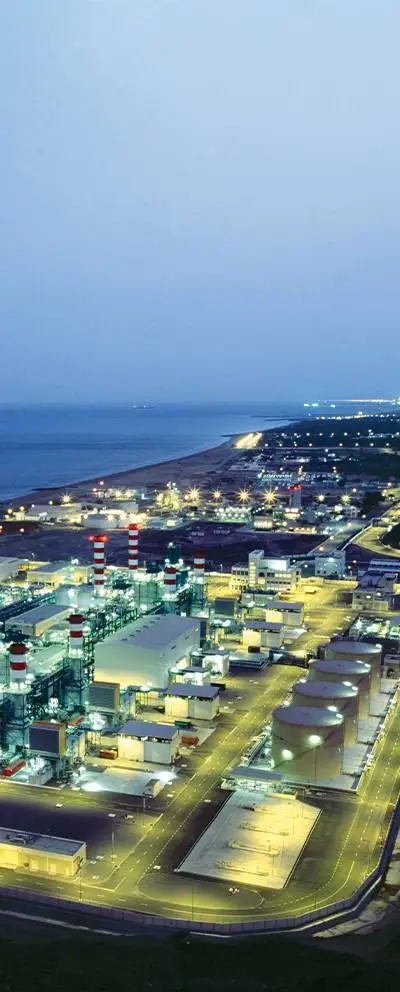
As we approach 2026, the industry stands at a crossroads of technological transformation. Artificial intelligence now monitors product quality in real time, predictive maintenance algorithms prevent unplanned downtime, and energy-efficient drying systems dramatically reduce operational costs . South Korean industry leader Nongshim, for instance, is currently building a new export facility in Busan featuring AI-powered smart factory technology, including deep-learning quality control systems and big-data-driven prediction capabilities . This facility alone will add 500 million servings of annual capacity, nearly doubling the company's export output .
For procurement teams, system integrators, and food industry investors, the challenge lies not in finding equipment suppliers—China's manufacturing hubs in Shandong and Henan alone host hundreds of machinery firms—but in identifying partners capable of delivering reliable, future-proof solutions . This guide provides a comprehensive framework for evaluating instant noodle production lines, from fundamental technology choices to supplier verification and commercial negotiations.
Understanding the Modern Instant Noodles Production Line
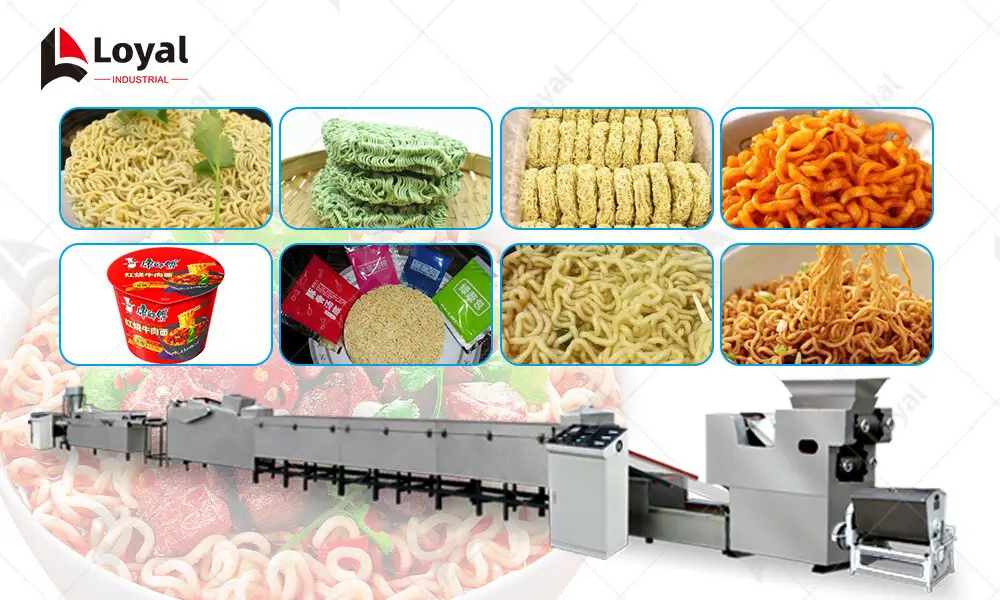
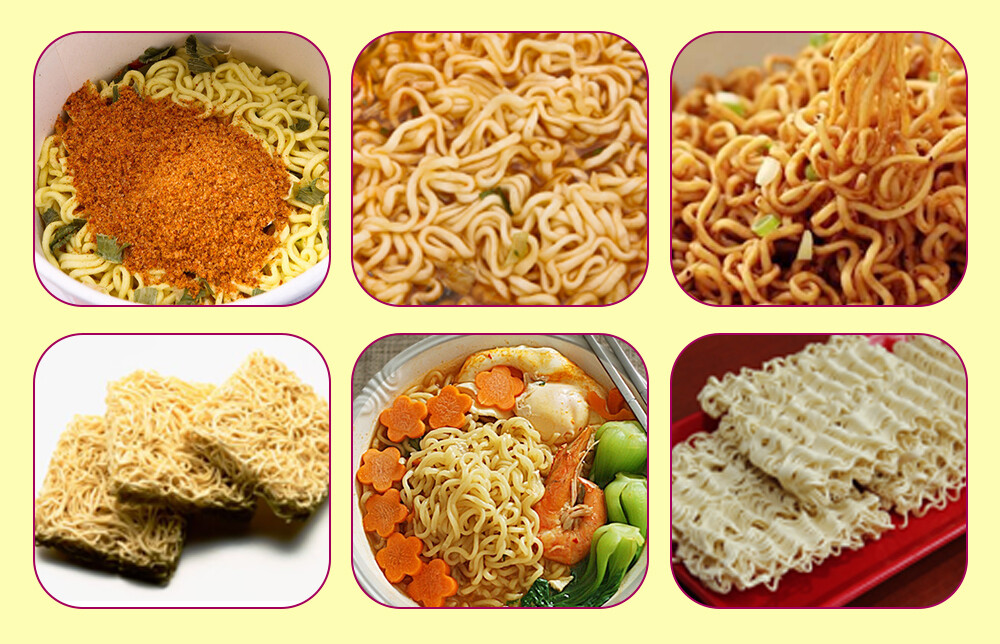
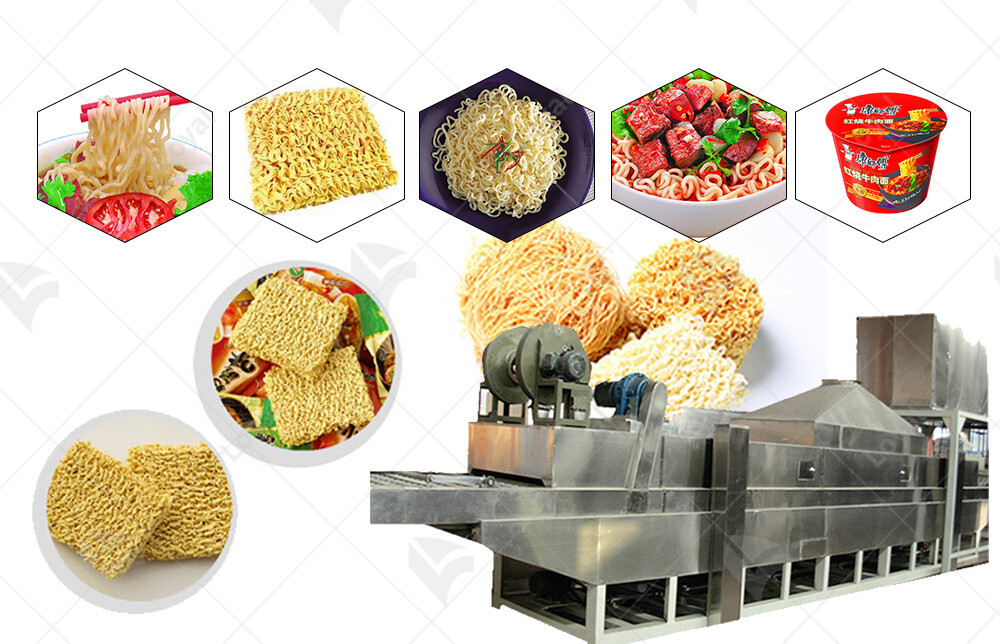
An instant noodles production line is an integrated system of food processing machinery designed to transform raw ingredients—primarily wheat flour, water, and seasonings—into finished, shelf-stable noodle products through a series of precisely controlled operations . While the core principle of noodle-making remains unchanged, today's production lines incorporate advanced automation, food safety protocols, and thermal processing technologies that ensure consistent quality across millions of servings.
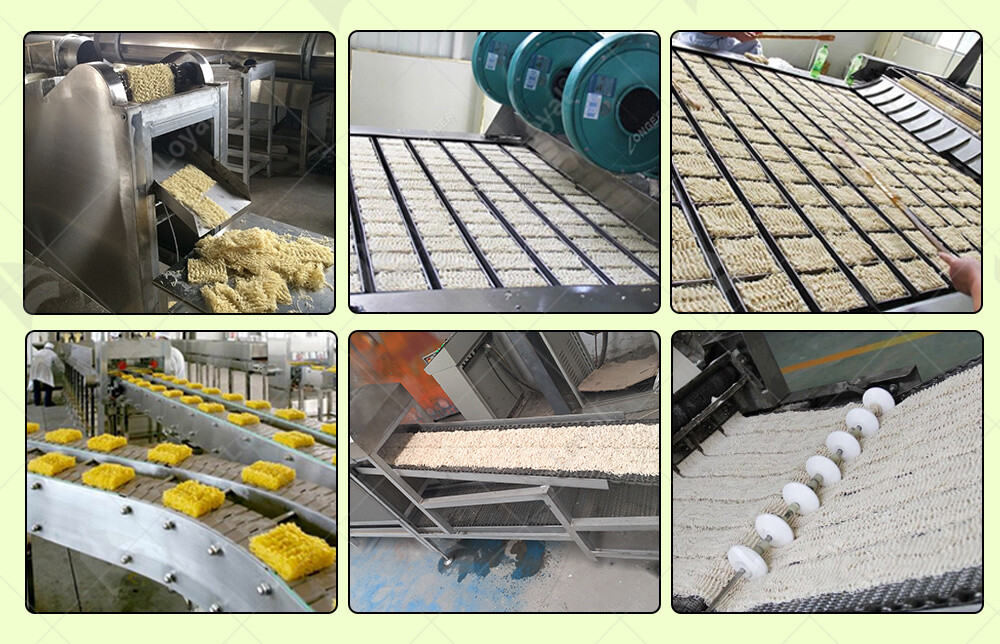
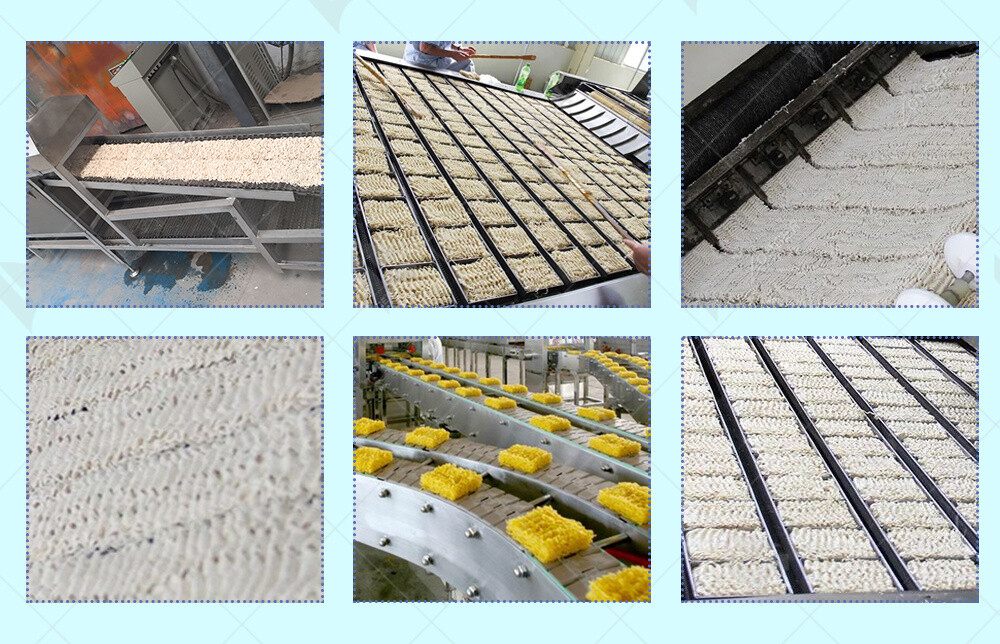
The typical production process follows a sequential flow: dough mixing, sheet forming or extrusion, steaming, cutting, folding, frying or drying, cooling, and packaging . Each stage must operate in perfect synchronization to maintain throughput and product uniformity.
Types of Production Line Configurations
Modern instant noodle lines can be categorized by processing method and output format:
Fried vs. Non-Fried Lines
The most fundamental distinction lies in the dehydration method:
- Fried Instant Noodle Lines: These systems submerge steamed noodle blocks in hot oil (typically 140-160°C) for rapid dehydration. Frying creates the characteristic porous texture that allows quick rehydration when consumers add hot water. The process also contributes to flavor development through oil absorption. Modern fried lines incorporate continuous oil filtration systems that maintain oil quality and extend its usable life .
- Non-Fried (Air-Dried) Lines: These systems use hot air circulation at controlled temperatures (typically below 85°C) to remove moisture gradually. The resulting noodles have lower fat content, appealing to health-conscious markets, but require longer rehydration times . Non-fried lines typically demand more floor space due to extended drying tunnels.
Production Scale Classifications
Equipment suppliers generally offer lines across three capacity tiers:
- Entry-Level Semi-Automatic Lines: Priced from $6,000 to $15,000, these systems suit startups, pilot operations, or artisanal producers. They typically produce 200-800 kg per hour with manual intervention at certain stages .
- Mid-Range Automated Lines: Ranging from $16,000 to $35,000, these fully automatic systems handle 800-2,000 kg per hour with integrated controls and minimal labor requirements. They represent the sweet spot for regional distributors .
- Industrial High-Capacity Lines: Exceeding $40,000 and reaching up to $350,000 for complete turnkey facilities, these systems produce 2,000-5,000+ kg per hour with advanced features such as SCADA monitoring, remote diagnostics, and fully integrated packaging . Henan Dongfang Noodle Machine Group, established in 1975, offers lines capable of producing up to 200,000 bags per 8-hour shift .
Product Format Specialization
Lines can also be optimized for specific product formats:
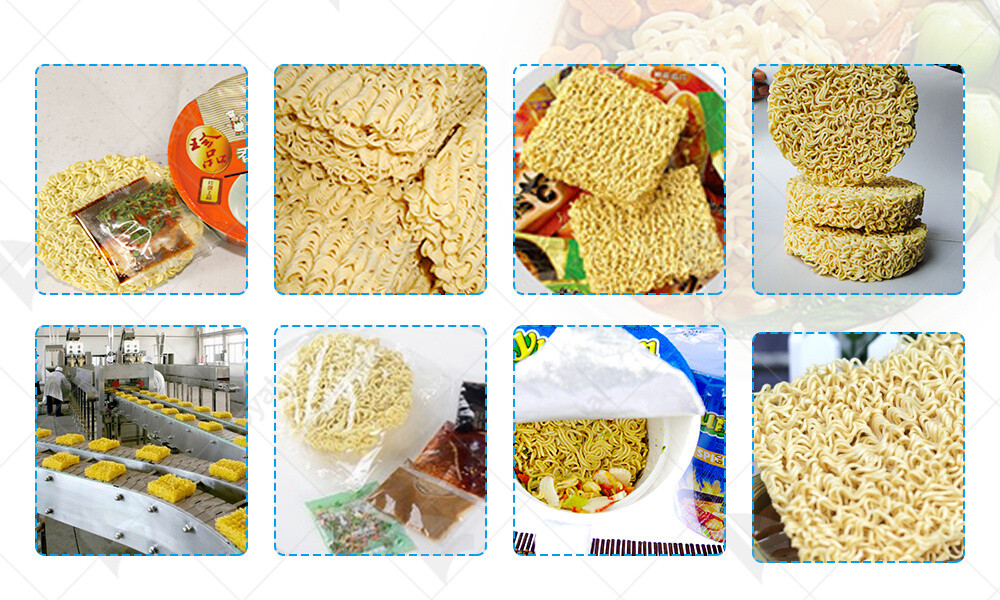
- Bagged Noodle Lines: Produce traditional block noodles for packet packaging
- Cup/Bowl Lines: Integrated with cup filling and sealing stations for single-serve containers
- Extruded Noodle Lines: Used for specialty products like udon or rice noodles, employing different forming mechanisms
- Multi-Functional Lines: Versatile systems capable of switching between fried, steamed, and baked processing methods
Critical Performance Specifications
When evaluating an instant noodles production line, procurement teams must verify technical parameters that directly impact product quality and operational efficiency.
Noodle Dimensions and Customization
Modern lines offer adjustable noodle width ranging from 2 to 6 mm, controlled through precision die-cutting mechanisms . This flexibility allows manufacturers to produce thin vermicelli-style noodles or thicker, chewier varieties. Noodle length typically ranges from 125 to 175 mm (5-7 inches), optimized for standard packaging formats .
Noodle firmness—a key consumer preference factor—can be adjusted by controlling dough hydration, mixing time, steaming duration, and frying or drying temperature. Advanced lines store multiple product recipes in PLC memory, enabling rapid changeovers between soft, medium, and extra-firm textures .
Production Capacity Verification
Suppliers frequently advertise theoretical maximum throughput, but real-world performance depends on numerous factors. Request documented evidence of sustained operation at rated capacity, including scrap rates during continuous production . Third-party inspection reports or timestamped video demonstrations provide objective verification.
Material Quality and Food Contact Surfaces
All components that contact food must be constructed from food-grade stainless steel—typically AISI 304 or 316. Verify material certifications and inspect weld quality, particularly in mixing tanks, steaming chambers, and drying tunnels. Poor weld finishes can harbor bacteria and complicate cleaning .
Energy Efficiency Considerations
With electricity and fuel costs representing significant operational expenses, evaluate specific energy consumption per kilogram of finished product. Look for IE3-rated motors, efficient insulation on steaming and drying sections, and heat recovery systems that capture waste heat for pre-heating applications . Non-fried lines operating at drying temperatures ≤55°C offer substantial energy savings compared to high-temperature frying systems .
Automation and Control Systems
The sophistication of a line's control architecture determines both product consistency and labor requirements. Modern systems feature:
- PLC-Based Controls with intuitive HMI interfaces supporting multiple languages
- Recipe Management storing dozens of product parameters for instant changeover
- Real-Time Monitoring of critical variables (temperature, humidity, pressure) with automatic adjustment capabilities
- Data Collection and Transmission supporting traceability and performance analysis
Leading-edge manufacturers now integrate AI-powered vision inspection systems that analyze hundreds of thousands of product images to precisely identify defects in noodle thickness, weight, and packaging conditions . Nongshim, for example, plans to expand its AI product inspection system to overseas production lines in the United States and China .
Industry Standards and Regulatory Compliance
Reliable suppliers demonstrate commitment to quality through recognized certifications. At minimum, an instant noodles production line should comply with:
ISO 9001: The baseline quality management standard, indicating documented processes and continuous improvement protocols. Verify current certification through official databases .
CE Marking: Mandatory for equipment operating in European markets, CE certification confirms compliance with EU safety, health, and environmental protection requirements .
Food Safety Standards: For exports to North America, verify FDA compliance for food-contact materials. For Middle Eastern markets, HALAL certification may be required . The IFS (International Featured Standards) certification, increasingly adopted by European retailers, digs deeper into risk assessment and process efficiency .
In-Process Quality Control Protocols
Leading manufacturers implement rigorous quality control throughout production:
100% Leak Testing: For steaming sections and fluid systems, verify that every unit undergoes pressure testing before shipment .
Dimensional Verification: Critical components should be inspected against certified drawings.
Pre-Shipment Testing: Reputable suppliers conduct factory acceptance tests (FAT) with buyers present or via live video, demonstrating the complete line running at rated capacity .
Third-Party Inspection Services: For high-value investments, consider engaging independent inspectors such as SGS, Bureau Veritas, or TÜV to verify equipment condition and performance before shipment .
Ongoing Quality Monitoring
Modern production lines incorporate quality control stations at critical points:
- Metal Detectors and X-Ray Systems: Identify foreign contaminants before packaging. AI-powered X-ray inspection can detect tiny contaminants that human inspectors might miss .
- Checkweighers: Verify portion accuracy, rejecting underweight or overweight packages.
- Vision Inspection Systems: Monitor seal integrity, label placement, and print quality.
Dongwon F&B Co. reported that after implementing AI-based X-ray inspection at its Changwon plant, consumer complaints fell by more than 20 percent .
Commercial Considerations
Price vs. Value Analysis: While entry-level lines may appear attractive at $6,000-$8,000, these typically suit micro-enterprises rather than continuous industrial production . Mid-range systems from $16,000-$35,000 represent the sweet spot for most growing businesses, offering reliable automation without premium pricing . Full-scale industrial installations often exceed $200,000, with top-tier lines reaching six figures .
Total Cost of Ownership: Evaluate beyond initial purchase:
- Energy consumption per production hour
- Projected maintenance intervals and costs
- Expected die and wearing parts replacement frequency
- Operator requirements (number and skill level)
- Potential throughput limitations
- Spare parts availability and delivery timelines
Payment Security: Utilize protected transaction methods such as Alibaba Trade Assurance or escrow services, with payment releases tied to successful inspection . Avoid full prepayments unless dealing with long-established partners.
Frequently Asked Questions for Buyers
How do I verify a supplier's credibility?
Cross-check certifications via official databases (e.g., ISO.org). Request unedited factory videos showing equipment assembly. Review transaction history and third-party feedback focusing on post-sale service quality. Consider using third-party inspection services .
What is the typical lead time for a customized line?
Standard configurations ship in 30-45 days. Custom lines with unique molds, control panels, or packaging integrations take 45-60 days. Complex non-fried drying systems may extend timelines to 75 days .
Can I test a prototype before full purchase?
Yes. Sample runs are common and usually completed within 7-10 days. You'll receive video footage, physical samples, and process parameter logs. Fees apply but are often refundable upon order placement .
Do suppliers offer installation and training?
Most offer optional on-site commissioning with technicians. Costs vary—typically $100-$120/day plus travel and accommodation—but some include remote training via video guides. Confirm language support (English, Spanish, Arabic, etc.) before signing .
Are electrical specifications adaptable?
Reputable suppliers customize motor drives, control cabinets, and wiring to match destination country standards. Always specify voltage, phase, and frequency requirements early in discussions .
Market Outlook 2026 and Beyond
As the instant noodle industry evolves, several trends will shape equipment requirements:
AI and Smart Factory Integration: The adoption of artificial intelligence across food manufacturing continues accelerating. Nongshim's new Busan facility exemplifies this trend, featuring deep-learning quality control and big-data-driven prediction capabilities . Buyers should prioritize lines with upgrade paths for smart sensors and data collection infrastructure.
Sustainability Pressures: Environmental regulations and consumer preferences are driving demand for energy-efficient equipment and sustainable packaging integration. Non-fried lines and systems with heat recovery capabilities will gain preference in regulated markets .
Flexibility Requirements: Manufacturers increasingly need lines capable of handling multiple product formats—fried and non-fried, cup and bag, varying portion sizes—to respond to market trends without capital-intensive changeovers .
Regional Market Growth: Emerging markets in Africa, Southeast Asia, and Eastern Europe present significant expansion opportunities, driving demand for mid-range automated lines that balance cost with reliability .
Conclusion
The instant noodles production line of 2026 represents a sophisticated convergence of food science, mechanical engineering, and digital technology. From vacuum extrusion systems that produce superior texture to AI-powered vision inspection that ensures perfect quality, today's equipment offers capabilities that were unimaginable just a decade ago.
For procurement teams and food industry investors, success lies not in finding the lowest price but in identifying partners who combine technical expertise, manufacturing discipline, and responsive support infrastructure. China's mature equipment ecosystem—centered in Shandong and Henan—offers abundant choices across price points and capability levels, but careful supplier evaluation remains essential .
By applying the selection criteria, quality standards, and evaluation frameworks outlined in this guide, buyers can confidently navigate the complex landscape of equipment options and select partners positioned for long-term success in the dynamic global instant noodle market.
Reference
The following are five authoritative foreign literature websites in the field of Industrial food machinery:
1. Food Engineering Magazine
Website: https://www.foodengineeringmag.com/
2.Food Processing Magazine
Website: https://www.foodprocessing.com/
3.Journal of Food Engineering
Website:https://www.journals.elsevier.com/journal-of-food-engineering
4. Food Manufacturing Magazine
Website:https://www.foodmanufacturing.com/
5. International Journal of Food Science & Technology
Website:https://onlinelibrary.wiley.com/