



China best Instant Noodle Making Machine Introduction to China’s Instant Noodle Machinery Industry
Introduction to China’s Instant Noodle Machinery Industry
China has become the global leader in manufacturing equipment for the instant noodle factory, offering efficient, scalable, and advanced solutions. At the core of this leadership is the widespread adoption of the automatic noodle machine, which has transformed traditional noodle production into a fully industrialized process.
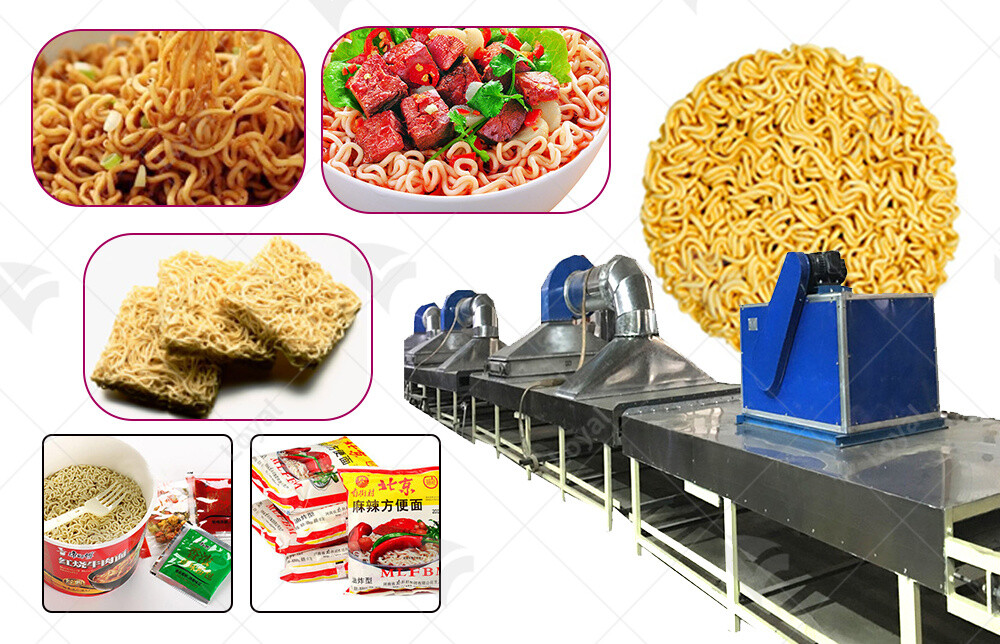
Driven by growing global demand for convenient and affordable food, the instant noodle industry now exceeds 120 billion servings annually. This has accelerated the development of integrated production lines that combine mixing, rolling, steaming, frying, and packaging into one automated system.
China’s success is supported by its strong industrial foundation and continuous innovation in food machinery. Modern automatic noodle machine systems feature intelligent controls and energy-efficient designs, improving productivity while ensuring consistent quality and food safety.
In addition, Chinese manufacturers offer flexible and customizable solutions, allowing businesses to adapt production lines to different capacities, noodle types, and market preferences.
Overall, China’s instant noodle machinery industry stands out for its scale, innovation, and cost-effectiveness, making it the preferred choice for building and upgrading modern instant noodle factories.
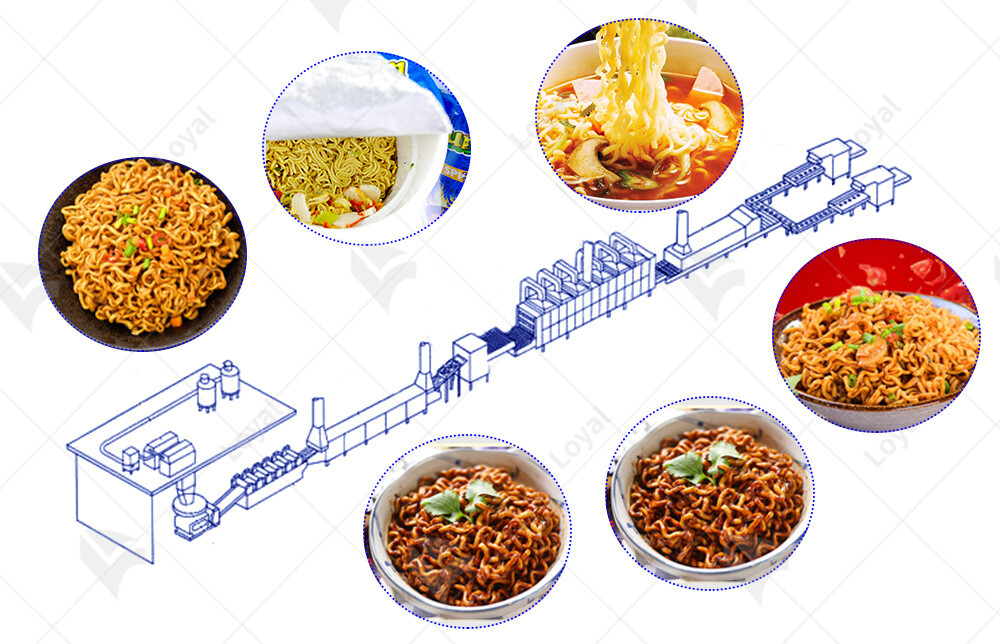
What Defines a Professional Instant Noodle Making Machine Manufacturer
A professional manufacturer in the instant noodle machinery sector is not simply a supplier of equipment, but a comprehensive solution provider capable of designing, engineering, and optimizing a complete instant noodle factory. The ability to deliver high-performance, reliable, and scalable systems—especially advancedautomatic noodle machine production lines—is what distinguishes top-tier manufacturers in China from ordinary equipment producers.
One of the most critical defining factors is adherence to international quality standards and certifications. Leading manufacturers comply with globally recognized systems such as ISO quality management and food safety regulations, ensuring that every automatic noodle machine meets strict hygiene and performance requirements. This is particularly important for companies exporting equipment to international markets, where compliance directly impacts operational approval and consumer trust.
Equally important is the level of technological innovation embedded in the machinery. A professional manufacturer invests heavily in research and development to improve automation, reduce energy consumption, and enhance production precision. Modern automatic noodle machine systems often include PLC control systems, intelligent monitoring, and fully automated processing stages—from dough mixing to packaging—ensuring seamless operation within an instant noodle factory. As noted by Dr. Li Jian, “The competitiveness of a noodle machinery manufacturer lies in its ability to integrate automation with food engineering principles, achieving both efficiency and product consistency.”
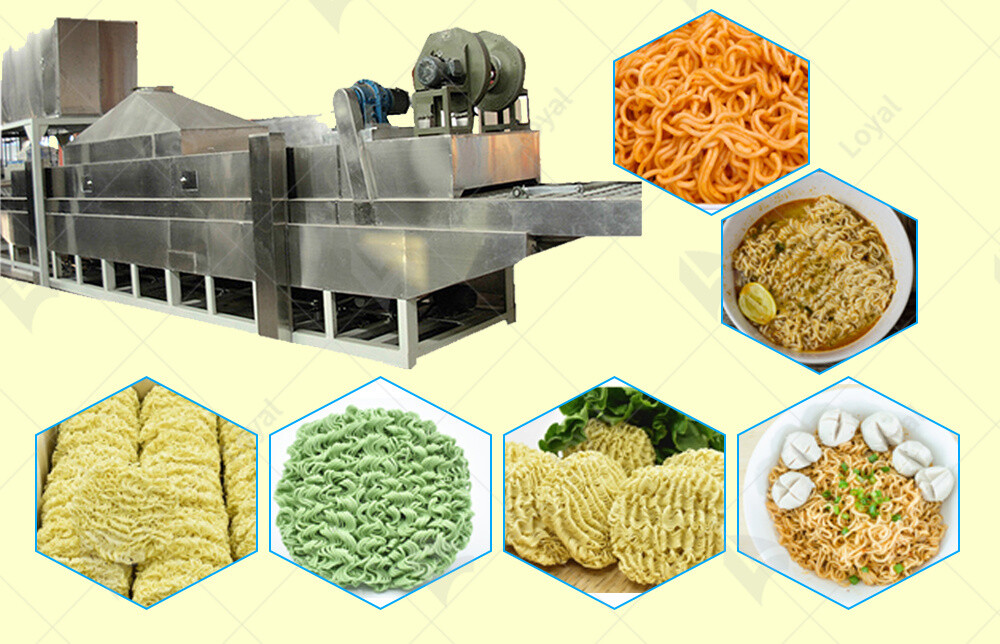
Experience and industry expertise also play a decisive role. Established manufacturers typically have years—if not decades—of experience in designing customized solutions for different types of instant noodles, including fried, non-fried, cup noodles, and premium variants. This allows them to tailor each automatic noodle machine line to specific production goals, whether for small-scale startups or large-scale instant noodle factory operations.
Another hallmark of professionalism is comprehensive after-sales support and technical service. Top manufacturers provide installation guidance, operator training, maintenance services, and long-term technical assistance. This ensures that the automatic noodle machine operates at peak efficiency throughout its lifecycle, minimizing downtime and maximizing return on investment.
Finally, a strong portfolio of successful global projects is a key indicator of credibility. Manufacturers that have supplied complete instant noodle factory solutions to clients across Asia, Africa, Europe, and beyond demonstrate their ability to meet diverse market demands. Their proven track record reflects not only technical strength but also reliability and trustworthiness in the highly competitive food machinery industry.
In essence, a professional instant noodle making machine manufacturer combines advanced engineering, strict quality control, deep industry knowledge, and customer-focused service. These elements collectively ensure that every automatic noodle machine delivered contributes to the efficient and sustainable operation of a modern instant noodle factory.
Core Features of Advanced automatic noodle machine Systems
Advanced automatic noodle machine systems are the backbone of a modern instant noodle factory, integrating multiple processing stages into a seamless, efficient, and intelligent production line. These systems are designed to maximize productivity, ensure consistent product quality, and reduce operational costs through automation and precision engineering. Understanding their core features is essential for businesses aiming to invest in high-performance food processing equipment.
As emphasized by Dr. Michael Cheng, “The future of instant noodle production lies in fully integrated automation, where every stage—from raw material input to packaging—is synchronized for optimal efficiency and minimal human intervention.”
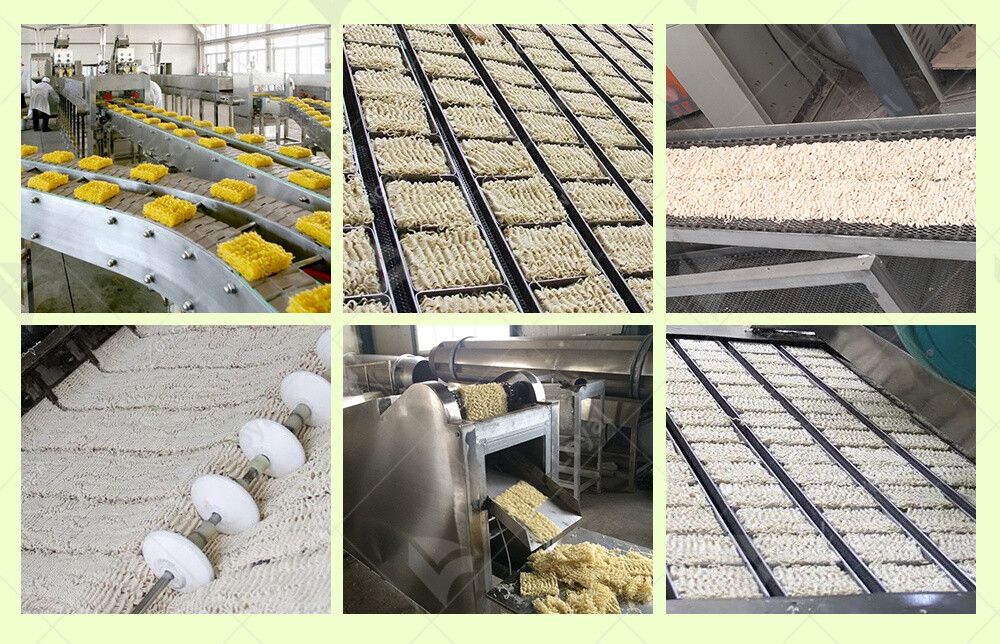
Below is a structured overview of the key features found in advanced automatic noodle machine systems used in a modern instant noodle factory:
Core Feature | Description | Benefits for instant noodle factory |
| Fully Automated Production Line | Integrates mixing, sheeting, steaming, cutting, frying, cooling, and packaging into one continuous system | Reduces labor dependency and increases production efficiency |
| PLC Intelligent Control System | Uses programmable logic controllers for precise monitoring and operation | Ensures consistent quality and easy operation of the automatic noodle machine |
| High-Speed Processing Capability | Designed for large-scale output with stable high-speed performance | Meets mass production demands in a modern instant noodle factory |
| Energy-Efficient Design | Incorporates heat recovery systems and optimized energy usage | Lowers operational costs and improves sustainability |
| Modular Configuration | Allows flexible customization based on production needs | Adapts to different factory sizes and product types |
| Hygienic Food-Grade Materials | Built with stainless steel and sanitary design standards | Ensures food safety compliance and easy cleaning |
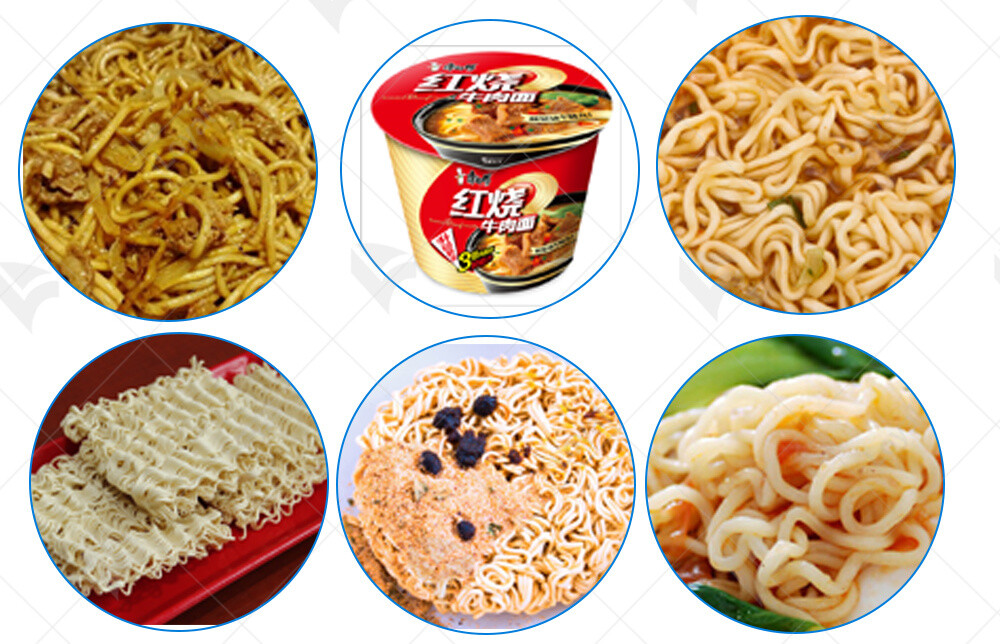
| Multi-Product Compatibility | Supports fried, non-fried, cup, and bagged noodles | Expands product range using a single automatic noodle machine line |
| Real-Time Monitoring & Diagnostics | Equipped with sensors and data tracking systems | Minimizes downtime and enhances maintenance efficiency |
| Automated Packaging Integration | Connects directly to packaging machines for end-to-end automation | Streamlines operations within the instant noodle factory |
| Low Maintenance & Durability | Engineered for long-term continuous operation | Improves ROI and reduces machine downtime |
In summary, the integration of these advanced features makes modern automatic noodle machine systems indispensable for any competitive instant noodle factory. Their ability to combine automation, flexibility, and efficiency ensures that manufacturers can meet global demand while maintaining high standards of quality and cost control.
Benefits of Investing in a High-Quality instant noodle factory Line
Investing in a high-quality instant noodle factory line is a strategic decision that directly impacts production efficiency, product quality, and long-term profitability. With the integration of advanced automatic noodle machine technology, manufacturers can transform traditional production into a highly automated, scalable, and cost-effective operation. This section explores the key advantages that make modern noodle production lines essential for competitive food processing businesses.
One of the most significant benefits is the dramatic increase in production efficiency. A modern automatic noodle machine can operate continuously with minimal human intervention, significantly boosting output while maintaining consistent quality. Automated processes such as dough mixing, rolling, steaming, frying, and packaging are precisely controlled, reducing variability and ensuring uniform noodle texture and taste. According to Dr. Andrew Smith, “Automation in food processing not only improves efficiency but also guarantees repeatable product quality, which is critical for global food brands.”
Flexibility and scalability further add to the value of advanced production lines. A modern automatic noodle machine can be customized to produce a variety of noodle types, including fried, non-fried, cup noodles, and specialty products. This allows manufacturers to quickly adapt to changing market trends and consumer preferences. Moreover, modular system designs make it easier to expand production capacity as business demand grows.
Finally, investing in a high-quality instant noodle factory line strengthens a company’s competitive advantage. Faster production cycles, consistent product quality, and lower operational costs enable businesses to compete effectively in both domestic and global markets. As Li Wei notes, “Companies that adopt advanced automatic production lines position themselves for long-term success by aligning efficiency with market demand.”
In conclusion, a modern automatic noodle machine integrated into a well-designed instant noodle factory offers a powerful combination of efficiency, cost savings, safety, and flexibility. These benefits not only improve daily operations but also ensure sustainable growth in an increasingly competitive food manufacturing industry.
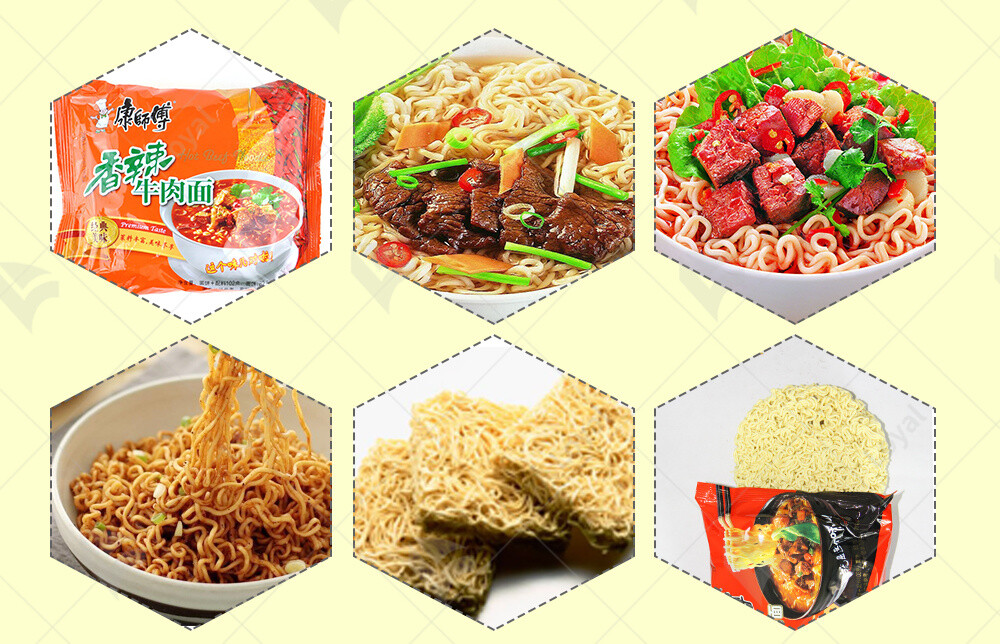
Types of Instant Noodle Making Machines Available in China
China offers a wide range of automatic noodle machine systems designed to meet different production scales, technical requirements, and product variations within a modern instant noodle factory. From small-capacity lines for startups to fully automated high-output industrial systems, Chinese manufacturers provide flexible and scalable solutions that align with global food processing standards.
These machines are typically categorized based on production capacity, noodle processing method (fried or non-fried), and automation level. The most advanced automatic noodle machine lines integrate continuous processing, intelligent control systems, and energy-efficient components, making them ideal for high-volume instant noodle factory operations.
As highlighted by Professor Chen Guoliang, “The diversity of noodle production lines in China allows investors to match equipment precisely with their capacity goals, ensuring both efficiency and cost-effectiveness.”
Common Types of Instant Noodle Production Lines
Small-scale automatic noodle machine lines (30,000–60,000 pcs/8h)
Medium-scale instant noodle factory systems (80,000–120,000 pcs/8h)
Large-scale industrial production lines (160,000–250,000 pcs/8h)
Fried and non-fried noodle processing systems
Cup noodle and bag noodle integrated production lines
Instant Noodle Production Line Parameters (Model Comparison Table)
Device Model | Yield | Steam Consumption (Kg/hour) | Factory Size (L×W×H m) | Opening Width (mm) | Installed Capacity (kW) | Operators (2 people, without packaging) |
LYN-II 3Y | 30,000 pieces/8h | 1000–1200 | 60×6×4.5 | 216–260 | 42 | 4 |
LYN-II 6Y | 60,000 pieces/8h | 1200–1400 | 76×8×4.5 | 300–330 | 56 | 4 |
LYN-II 8Y | 80,000 pieces/8h | 1300–1500 | 76×8×4.5 | 420–450 | 68 | 6 |
LYN-II 10Y | 100,000 pieces/8h | 1400–1600 | 95×8×5.0 | 420–450 | 80 | 6 |
LYN-II 12Y | 120,000 pieces/8h | 1800–2000 | 95×8×5.0 | 510–550 | 83 | 6 |
LYN-II 16Y | 160,000 pieces/8h | 2000–2400 | 110×10×5.5 | 630–650 | 106 | 7 |
LYN-II 18Y | 180,000 pieces/8h | 2400–2600 | 110×10×5.5 | 720–730 | 114 | 7 |
LYN-II 20Y | 200,000 pieces/8h | 2600–2800 | 120×12×5.5 | 765–800 | 125 | 8 |
LYN-II 25Y | 250,000 pieces/8h | 3000–3200 | 120×12×5.5 | 870–900 | 140 | 8 |
How to Choose the Best Instant Noodle Machine Manufacturer in China
Selecting the best manufacturer for your automatic noodle machine is a critical decision that directly determines the efficiency, quality, and long-term success of your instant noodle factory. With numerous suppliers in China offering a wide range of food processing equipment, it is essential to evaluate manufacturers based on technical capability, reliability, and service support rather than price alone. A professional partner will not only provide machinery but also deliver complete production solutions tailored to your business goals.
One of the first factors to consider is the manufacturer’s technical expertise and production capacity. Leading companies invest heavily in research and development, ensuring their automatic noodle machine systems incorporate advanced automation, precision engineering, and intelligent control technologies. These features are essential for maintaining consistent noodle quality and high output in a modern instant noodle factory. As noted by Dr. Robert Liu, “The true value of a machinery supplier lies in its engineering depth and its ability to customize solutions for different production environments.”
After-sales service and technical support are equally important. A professional manufacturer should provide comprehensive support, including installation guidance, operator training, maintenance services, and spare parts supply. Efficient after-sales service ensures that your automatic noodle machine operates smoothly with minimal downtime, which is essential for maintaining productivity in a competitive instant noodle factory environment.
Finally, cost-effectiveness should be assessed from a long-term perspective rather than focusing solely on initial price. A slightly higher investment in a high-quality automatic noodle machine often results in lower maintenance costs, higher efficiency, and better product consistency. This ultimately leads to greater profitability for your instant noodle factory.
In conclusion, choosing the right automatic noodle machine manufacturer in China requires a comprehensive evaluation of technology, quality, service, and experience. By partnering with a reliable and professional supplier, businesses can build a high-performing instant noodle factory that meets global standards and achieves sustainable growth.
References
The following are five authoritative foreign literature websites in the field of industrial microwaves:
1. IEEE Xplore Digital Library
Website: [https://ieeexplore.ieee.org/]
2.ScienceDirect
Website: [https://www.sciencedirect.com/]
3. SpringerLink
Website: [https://link.springer.com/]
4. Wiley Online Library
Website: [https://onlinelibrary.wiley.com/]
5. PubMed
Website: [https://pubmed.ncbi.nlm.nih.gov/]