



How does an automated puffed food production line operate?
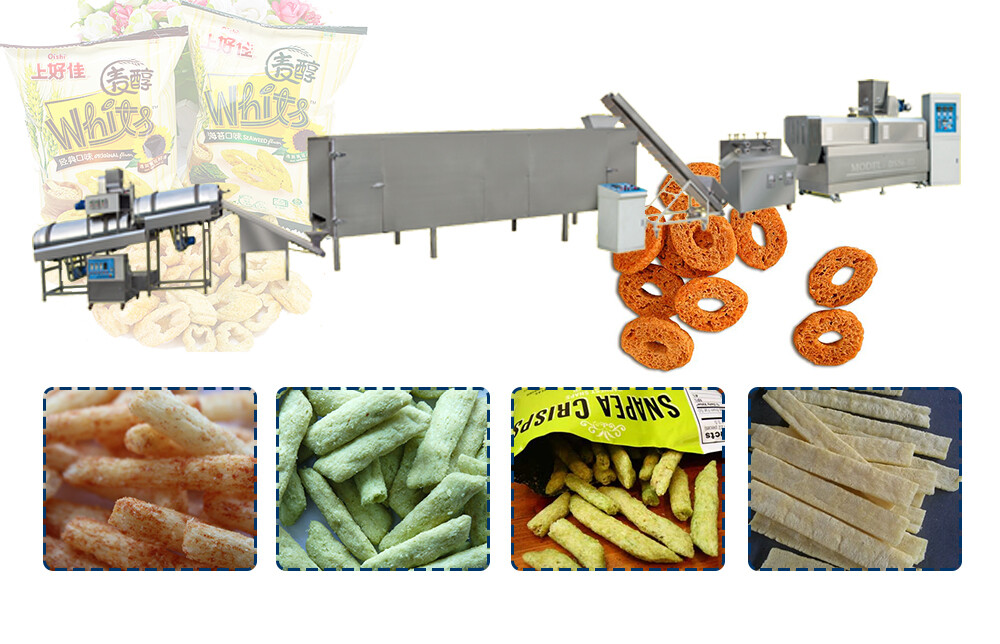
Customers often ask us during factory visits, "How automated is your entire production line? Is it just pressing a button, the raw materials go in, and the finished product comes out?" That's an excellent question. Today, Shandong Loyal Industrial Co., Ltd. will use a typical puffed food production line as an example to guide you through the complete automated process from raw materials to finished product in the simplest terms, showing you how each step works in coordination.
Automation is not "unmanned," but "controllable."
Before we begin, let's clarify a concept. The goal of food production automation is not to completely replace humans, but to make the production process predictable, repeatable, and controllable. The human role shifts from "operating machines" to "monitoring systems," delegating precise, repetitive, and labor-intensive tasks to machines. The benefits are direct: more stable product quality, higher production efficiency, less raw material waste, and lower labor intensity for operators.
A Workflow of an Automated Puffed Food Production Line
Let's take the production of common breakfast cereal rings or puffed snacks as an example to see how each step operates automatically:
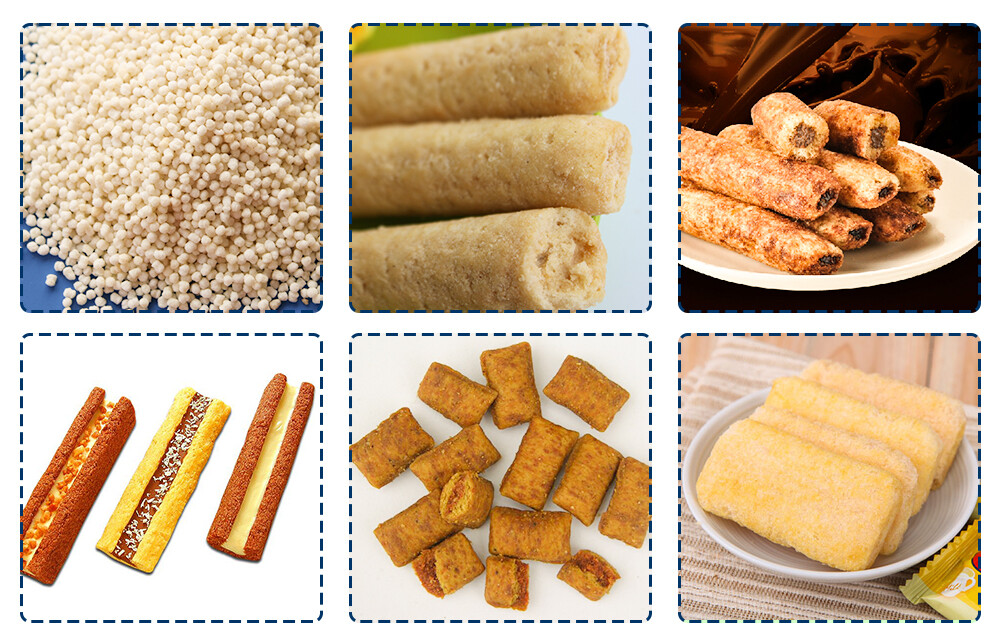
Puffed Snack Production Line
Step 1: Raw Material Receiving and Automatic Batching
Before starting the production line, the operator inputs the production formula and batch output into the central control computer. The system automatically calculates the required amount of each raw material (such as corn flour, rice flour, sugar, salt, etc.).
Workflow: Raw materials are stored in silos outside the workshop or at feeding stations inside the workshop. After the system starts, vacuum or mechanical conveying devices automatically transport each raw material to a high-precision electronic scale for weighing according to a set ratio. After weighing, the raw materials are automatically unloaded into the mixer.
Key Points Here: The automatic batching system can precisely control the amount of trace components (such as vitamins and minerals) added, avoiding human error. At the same time, all conveying pipelines are sealed, effectively reducing dust.
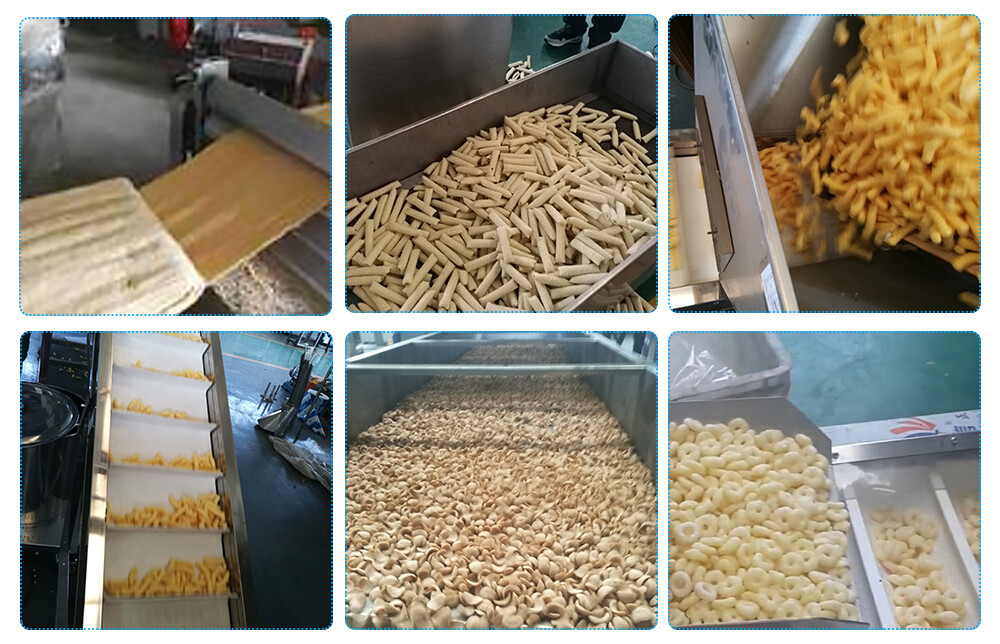
Step 2: Automatic Mixing
Workflow: Multiple raw materials are efficiently mixed in the mixer. After a set time, the uniformly mixed material is automatically unloaded into a buffer silo, awaiting entry into the next stage. The uniformity of mixing directly affects the subsequent puffing effect and the consistency of the product's taste.
Key point here: Mixing time and speed can be automatically set and adjusted according to the characteristics of the raw materials, ensuring that each batch of materials reaches the ideal mixing state.
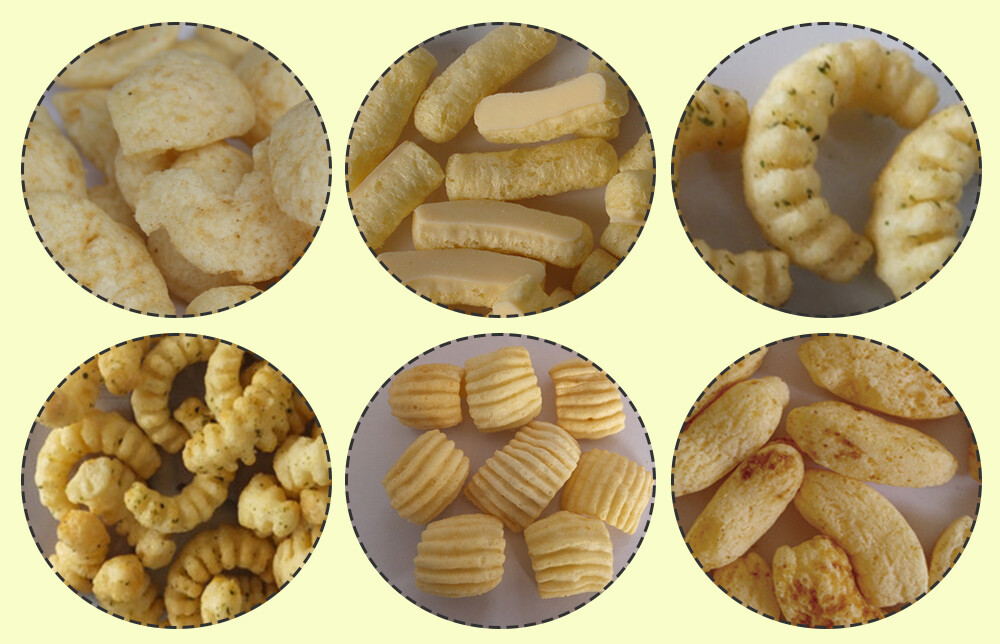
Step 3: The core automatic extrusion puffing
Workflow: The mixed material enters the feed inlet of the twin-screw extruder at a stable and uniform flow rate from the buffer hopper. Inside the barrel, the material is forcibly conveyed, sheared, and heated by the screw. The barrel is divided into multiple independent heating/cooling zones, and the temperature of each zone is precisely controlled by a PLC (Programmable Logic Controller), with very small fluctuations.
When the material reaches the set gelatinization state and is pushed onto the die, it is instantly extruded and puffed under pressure, and automatically cut into the required particle length by a high-speed rotating cutter.
Key point here: This is one of the most automated parts of the entire line. The operator only needs to set the target temperature, screw speed, and cutter speed on the screen, and the system will automatically adjust and maintain these parameters stably. The equipment can also monitor screw torque in real time. When the torque abnormally increases (potentially indicating a risk of blockage), it will automatically alarm or take protective action.
Step 4: Automatic Drying and Cooling
Workflow: The freshly extruded semi-finished product has relatively high moisture content and temperature. It is evenly spread onto the various layers of the mesh belt in a multi-layer mesh belt dryer via a vibrating conveyor. The hot air temperature, wind speed, and mesh belt speed inside the dryer are automatically set according to process requirements. Hot air penetrates the material layers, removing moisture.
The dried product enters a cooling conveyor, where it is cooled down to near room temperature with ambient or cooling air, preparing it for subsequent seasoning and packaging.
Key point here: The drying temperature is automatically controlled and can be kept stable. If the product is found to be too wet or too dry during subsequent seasoning, the operator can fine-tune the dryer's mesh belt speed or temperature on the screen, and the system will respond automatically.
Step 5: Automatic Seasoning and Spraying
Workflow: The cooled base product enters a rotating seasoning drum. The system automatically controls the amount of oil and seasoning powder added according to the set seasoning ratio. Oils are atomized and sprayed through precision nozzles, while seasoning powder is evenly distributed via a metering screw.
The key point here: The automatic seasoning system maintains a highly consistent seasoning ratio, avoiding uneven seasoning and minimizing waste.
Step Six: Automatic Pre-packaging Process and Packaging
Workflow: After seasoning, the finished product passes through a vibrating screen to remove debris, a metal detector to ensure it is free of foreign objects, and then enters the hopper of the automatic packaging machine. The packaging machine automatically makes bags, measures, fills, seals, and finally prints the production date.
The key point here: The automatic checkweigher monitors the weight of each bag in real time to ensure it meets the standard, automatically rejecting products that do not meet the weight requirement, ensuring consistency of the finished products.
What do the operators do?
You might ask, with so many steps automated, what do the operators do? Their main tasks are:
Pre-start checks: Confirming that all equipment is in normal working order and that raw materials are sufficient.
Parameter setting and monitoring: Setting production parameters on the computer in the central control room, monitoring the entire line's operating status (temperature, pressure, output, etc.) through the screen, and paying attention to alarm information.
Quality Sampling Inspection: Samples are taken periodically to check sensory indicators such as color, taste, and moisture content of the product, comparing them with standard samples.
Anomaly Handling: When the system issues an alarm, promptly visit the site to investigate and resolve the problem.
Daily Cleaning and Maintenance: After production, perform the cleaning procedure or necessary cleaning work.
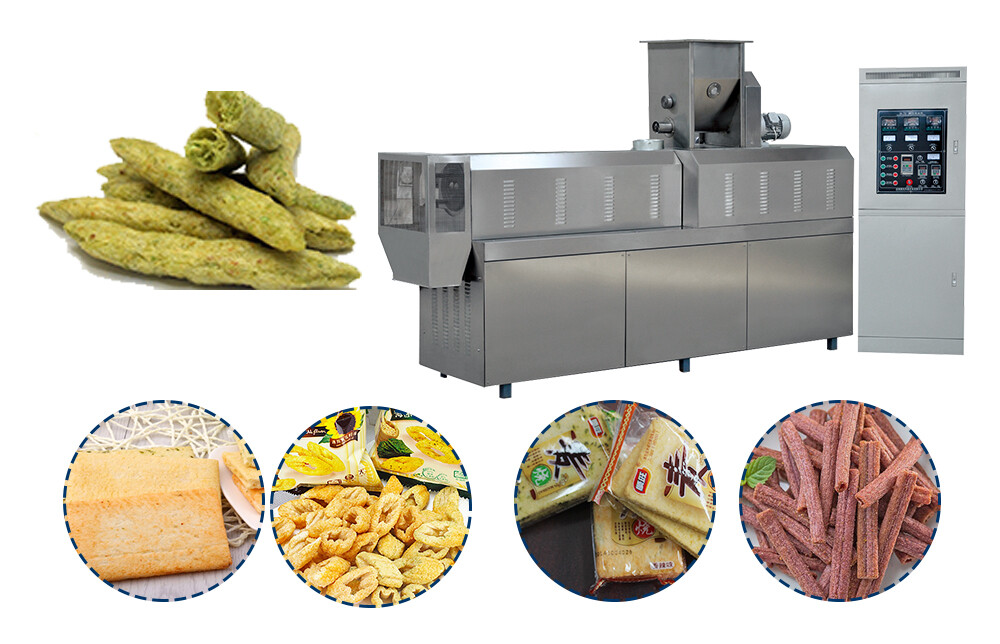
The Practical Value of Automated Production Lines
A well-designed automated production line can bring tangible benefits to a company:
More Stable Quality: Eliminates human error, ensuring each batch of products is as similar as possible.
Higher Efficiency: Continuous production reduces downtime and ensures guaranteed production capacity.
More Controllable Costs: Precise ingredient dispensing reduces waste, stable processes lower scrap rates, and automated operation saves manpower.
Safer Production: Reduces direct contact between personnel and raw materials/equipment, lowering the risk of cross-contamination and workplace injuries.
Data Traceability: The control system records production data, providing a basis for quality traceability and process optimization.
Automation Level Can Be Configured to Demand
It should be noted that automation is not necessarily "all or nothing." We can provide different levels of automation solutions based on your budget and actual needs. Starting with automated control of key processes, we will gradually expand to ultimately achieve full line integration.
If you are planning a new puffed food production line or looking to upgrade the automation level of your existing line, please feel free to contact Shandong Loyal Industrial Co., Ltd. We can provide you with practical automation upgrade solutions tailored to your specific products, capacity, and budget, helping you produce more stable products in a more controllable manner.
Reference
The following are five authoritative foreign literature websites in the field of Industrial food machinery:
1. Food Engineering Magazine
Website: https://www.foodengineeringmag.com/
2.Food Processing Magazine
Website: https://www.foodprocessing.com/
3.Journal of Food Engineering
Website:https://www.journals.elsevier.com/journal-of-food-engineering
4. Food Manufacturing Magazine
Website:https://www.foodmanufacturing.com/
5. International Journal of Food Science & Technology
Website:https://onlinelibrary.wiley.com/